
What is an ESA Certificate of Acceptance?
An ESA Certificate of Acceptance records that the electrical work covered by the notification has passed ESA review and meets the Ontario Electrical Safety Code. ESA sends it to whoever filed the notification; if your Licensed Electrical Contractor filed it, ask that contractor for your copy.
Keep the certificate with the renovation records. A contractor invoice, product warranty, or municipal building permit is a different document. See ESA’s certificate guidance.
Start with the Licensed Electrical Contractor.
In Ontario, electrical contracting work must be handled by an appropriately licensed electrical contractor—not added informally to a general renovation scope.
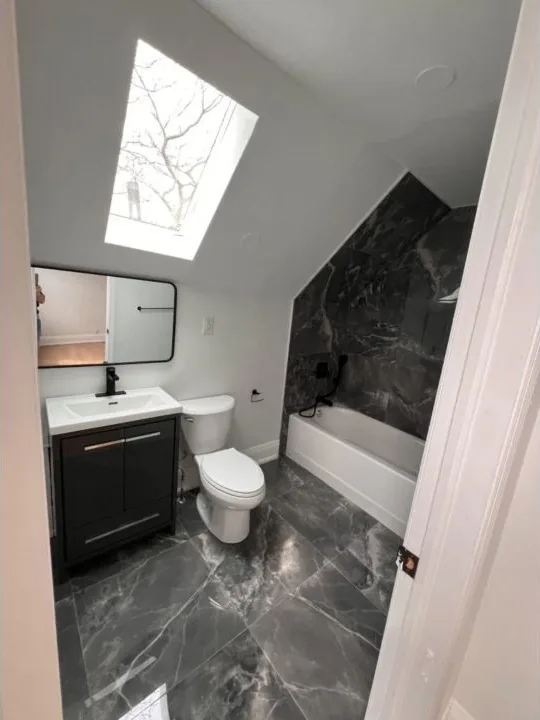
Ask for the contractor’s ECRA/ESA licence number and verify it using ESA’s public contractor lookup. Define whether the renovation contractor or the electrical contractor is coordinating site access, product information, rough-in timing, inspections, corrections, and closeout. JT coordinates qualified electrical trade work as part of renovation delivery; it does not represent itself as the Licensed Electrical Contractor.
Is an ESA notification the same as a certificate?
No. The notification starts the ESA review process; the Certificate of Acceptance follows after the work passes review. When you hire a Licensed Electrical Contractor, that contractor arranges the required notifications. The exact requirements depend on the electrical work, so confirm them with the electrical contractor and ESA before work begins.
Record the notification or reference details with the project file. The electrical contractor should also know when work must remain visible for review and when other finishes can proceed. Closing walls or ceilings before the required review can create avoidable reopening, delay, and cost.
How do you get a copy of the ESA certificate?
- Ask the Licensed Electrical Contractor: request the Certificate of Acceptance for the completed work, using the property address and notification reference to identify the job.
- If the contractor cannot provide it: follow the Access to Information request instructions on ESA’s official certificate page.
- Save the record: keep the copy with the contractor’s details and the relevant building, unit, and renovation file.
Put electrical details into the renovation scope
- Identify every light, switch, receptacle, appliance connection, smoke or carbon-monoxide device, exhaust fan, panel, and dedicated circuit affected by the project.
- Confirm fixture specifications, dimmer compatibility, colour temperature, mounting locations, appliance loads, and who supplies each product.
- Coordinate cabinet drawings, tile layouts, mirrors, millwork, plumbing fixtures, and accessibility requirements before rough-in locations are fixed.
- State who files the ESA notification, books required reviews, completes corrections, and provides the Certificate of Acceptance.
- Do not schedule insulation, drywall, cabinetry, or final closeout around an assumed inspection date; confirm the actual sequence.
Build a complete electrical closeout file
Request the Licensed Electrical Contractor’s company name and licence number, invoice, notification reference, Certificate of Acceptance, product manuals, warranty information, labelled circuit changes, and any operating instructions. Property managers should associate the records with the correct building, unit, work order, and completion date.