
Record first; decide second.
Complete the condition record before removing items or starting repairs.
Use wide room photographs, detail photographs, short notes, and consistent file names. Separate observed conditions from conclusions. For example, record “stain below bathroom, approximately 300 mm wide” rather than assuming the source. Escalate active leaks, electrical concerns, unsafe conditions, or suspected hazardous materials to the appropriate qualified party.
Room-by-room inspection
- Entry and doors: locks, door operation, frames, closers, weatherstripping, hardware, walls, flooring, and unit numbers.
- Living areas and bedrooms: ceilings, walls, windows, blinds, flooring, baseboards, doors, outlets, switches, lights, radiators, and visible damage.
- Kitchen: cabinetry, hinges, drawers, counters, backsplash, sink, faucet, plumbing connections, appliances, ventilation, outlets, lighting, walls, flooring, and caulking.
- Bathroom: tub or shower, tile, grout, caulking, vanity, sink, toilet, accessories, ventilation, lighting, walls, ceiling, door, and visible moisture signs.
- Laundry and mechanical areas: connections, shutoffs, drains, vents, equipment clearance, access panels, and damage around services.
- Balcony or exterior-facing elements: doors, screens, thresholds, finishes, drainage observations, and any building-responsibility items requiring separate follow-up.
A JT rental-unit example: inspect the transitions between rooms
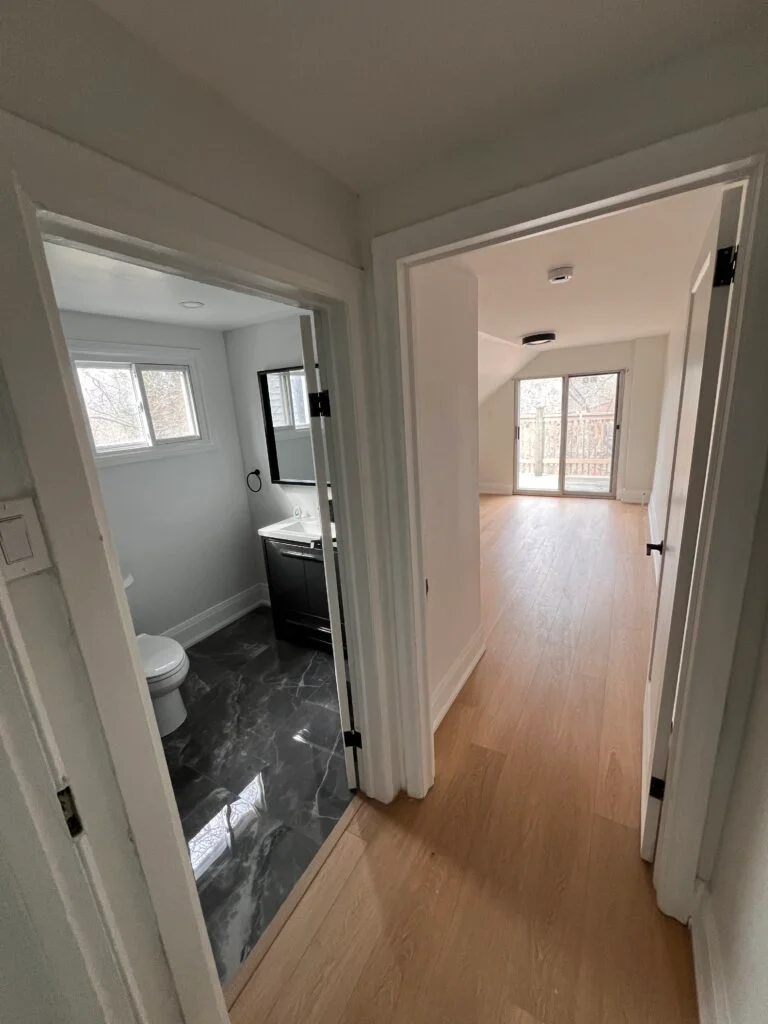
The JT rental-unit project gallery shows a tiled bathroom beside a hallway and bedroom with light wood flooring. The doorway view makes the floor transition, trim, door frame and nearby wall finishes visible in one record.
Add this to your inspection: take a wide doorway photograph and a separate close-up of each threshold. Record door operation, trim condition and the junction between floor materials as separate checks. A photograph records appearance; testing and the property team’s review establish whether the agreed handover requirements are met.
Group the findings into a scope for JT’s rental-unit turnover services, then use the turnover planning guide to assign approvals and closeout responsibilities.
Sort the findings into useful priorities
- Immediate escalation: conditions that may affect safety, active water, essential services, or building operations.
- Required make-ready work: repairs, cleaning, functional items, and damaged finishes needed before the next occupancy.
- Standard turnover finishes: approved paint, flooring, hardware, fixtures, and property-standard replacements.
- Optional capital improvement: upgrades that need a separate budget decision or longer procurement.
- Monitor or refer: items outside the contractor’s scope, shared-building responsibilities, or conditions needing specialist review.
Convert the inspection into a priceable scope
For every approved item, identify the room, location, action, quantity, material or finish standard, who supplies it, access requirements, and completion evidence. Add building-wide requirements such as keys, elevators, loading, parking, protection, disposal, work hours, site contacts, purchase-order rules, and who can approve additional work.
Use the same checklist at handover
Return to the original record. Confirm completed items, approved substitutions, deficiencies, cleaning, keys, fixtures, manuals, trade documents, warranties, and final photographs where required. Record unfinished or owner-deferred work rather than allowing it to disappear from the closeout.
If the unit is still occupied
Ontario entry rules and notice requirements may apply. The property owner or manager should confirm the lawful reason, timing, notice, and resident communication for the specific situation. Do not treat a contractor appointment as a substitute for the owner’s responsibilities.
Once your inspection is documented, estimate the turnover cost or submit the work order directly.
Official reference and related guidance
For occupied Ontario rental units, review the current Residential Tenancies Act entry provisions and obtain appropriate advice for the property’s circumstances. Continue with JT’s turnover planning guide, work-order checklist, and unit-turnover service.